Calligraphy is more than just decorative writing — it is an art form that transforms words into emotion.
Whether you want to write elegant wedding invitations, create Islamic art pieces, beautify your journals, or learn Arabic Art, the journey begins with understanding the basics.
But here’s the problem most beginners face:
The Problem:
“When I try calligraphy, my letters look shaky, uneven, and nothing like the beautiful calligraphy I see online. I don’t know where to start or what tools to use.”
The Solution:
Don’t worry — every master calligrapher once struggled with the same issues. Calligraphing is a skill that improves with the right tools, the right technique, and continuous practice.
This guide will help you learn calligraphing step-by-step like a human, not a robot — simple, clear, practical, and friendly.
Let’s begin your journey into the magical world of calligraphy.
1. Understanding Calligraphy: What Is It and Why Does It Matter?
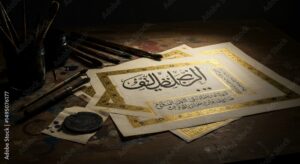
Calligraphy is the art of creating beautiful, expressive letters using structured strokes. Unlike handwriting, this is intentional. Every curve, angle, and thickness is controlled.
There are different styles
-
Arabic calligraphy (Diwani, Thuluth, Naskh)
-
Modern calligraphy
-
Traditional pen calligraphy
-
Brush lettering
Dubai is becoming a global hub for calligraphy exhibitions, Arabic art festivals, and modern typography shows.
Many of Dubai’s artists beautifully mix classical Arabic Art with modern design, producing masterpieces seen in galleries and cultural events across the city.
A Touch of Dubai’s Heritage
The UAE has a deep respect for Arabic Art, especially in Islamic art.. Historical mosques, museums, and cultural centers display incredible scripts that date back centuries.
Dubai hosts annual calligraphy exhibitions showcasing the works of the most talented local and international artists.
Some well-known calligrapher masters often featured in Dubai art events include:
-
Mohammed Mandi – One of the UAE’s most respected Arabic calligraphers
-
Khalid Al Jallaf – President of the Emirates Society for Arabic Calli-Art
-
Rashid Al Shashai – A modern Saudi artist often showcased in Dubai galleries
Adding these references connects beautifully with Dubai’s calligraphy heritage and the artistic personalities shaping the region.
2. Choose the Right Tools (Beginner-Friendly Tools You Need)
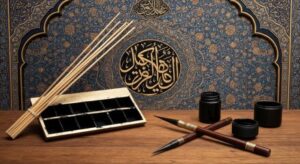
Choosing the right tools is the first real step in learning calli-Art. You don’t need expensive items — start simple.
Essential Beginner Tools
-
Calligraphy Pen or Nib Holder
-
Broad-edge nibs for classic styles
-
Pointed nibs for modern calligraphy
-
-
Brush Pens (Beginner-friendly)
-
Easy to control
-
Perfect for modern script styles
-
-
Quality Ink
-
Black ink for practice
-
Gold, brown, or blue for final artworks (very popular in Dubai aesthetics)
-
-
Smooth Paper
-
Avoid rough textures
-
Use dotted or lined practice sheets
-
-
A Ruler & Pencil
-
For guidelines and alignment
-
3. Learn the Basic Strokes (The Foundation of Everything)
Here is the secret no one tells beginners:
Calligraphy is NOT about writing letters. It’s about mastering strokes.
Every beautiful letter you see is created from simple strokes like:
-
Thin upward stroke
-
Thick downward stroke
-
Oval strokes
-
Entrance & exit strokes
-
Curved strokes
-
Basic loops
Practice these strokes daily for 10–15 minutes.
Within a week, you will start noticing smoother lines and more control.
Why Stroke Practice Matters?
Beginners often skip stroke practice because it feels boring — but it is the most important foundation in calli-Art.
Just like dancers practice basic moves or musicians practice scales, calligraphers build muscle memory through repeated strokes.
4. Master Letter Formation (Slow, Controlled, Beautiful)
After stroke practice, move to the alphabet.
Tips for Perfect Letter Formation
-
Write slowly — calligraphy is not handwriting.
-
Keep your pen at the right angle (usually 30–45 degrees).
-
Maintain consistent spacing.
-
Follow guidelines to prevent letters from floating or leaning.
If you’re practicing Arabic calligraphy, focus on:
-
Horizontal baseline
-
Balance of thick and thin strokes
-
Smooth curves
-
Script rules like proportions and connections
Dubai’s master calligraphers emphasize discipline and structure in Arabic calligraphy. Every letter has a defined height, angle, and flow — mastering this gives your writing harmony and elegance.
5. Add Style: Explore Popular Calligraphy Styles
Choosing a style depends on your interest:
• Modern Calligraphy
Popular for weddings, branding, and social media.
• Arabic Calligraphy
Deep cultural roots, especially Thuluth, Diwani, and Naskh, are widely used in Dubai’s art galleries.
• Brush Lettering
Fun, expressive, and ideal for beginners.
• Gothic / Blackletter
Bold and dramatic.
Exploring various styles helps you find your artistic identity.
6. Practice the Right Way (Avoid These Beginners’ Mistakes)
Common Mistakes
- Holding the pen like a regular pen
- Pressing too hard
- Writing too fast
- Not using guidelines
- Practicing with cheap paper
How to Fix Them
- Keep a relaxed grip
- Use controlled pressure for thick & thin lines
- Follow consistent angles
- Use smooth, bleed-proof paper
- Practice slow, intentional strokes
Dubai’s Pro Tip:
Many calligraphy teachers in Dubai recommend 15 minutes of warm-up strokes before starting actual letters — just like stretching before exercise.
7. Create Your First Calligraphy Artwork
Once you feel comfortable with letters:
-
Write a simple quote
-
Add decorative flourishes
-
Try gold ink (very popular in Arabic calligraphy)
-
Frame your artwork
-
Share it on Instagram — calligraphy content performs very well with Dubai’s art-loving audience
8. The History of Calligraphy in Dubai (A Cultural Touch)
Calligraphy has always been part of the UAE’s artistic identity. From Quranic inscriptions to architectural designs, calligraphy is considered a sacred and respected art.
Major influences in Dubai’s calligraphy culture include:
-
Islamic calligraphy traditions
-
Persian & Ottoman styles
-
Modern digital typography
Dubai hosts exhibitions such as:
-
Dubai Calligraphy Biennale
-
Art Dubai
-
Sharjah Calligraphy Biennial
These events invite global artists and celebrate creativity rooted in heritage. If you’re learning calli-Art in Dubai, you’re in one of the world’s best cities for artistic inspiration.
9. Where to Learn Calligraphy in Dubai (Helpful for Beginners)
Dubai offers several learning options:
-
Art centers & workshops
-
Cultural foundations
-
Online courses
-
Private calli-Art instructors
-
Exhibitions showcasing live Art
You can find teachers specializing in:
-
Arabic calligraphy
-
Modern calligraphy
-
Japanese calligraphy (often seen in Dubai art events)
-
Brush lettering
If you’re passionate about learning calligraphy or want custom artwork, Dubai’s talented calligrapher artists are ready to bring your words to life.
At CalliDubai, we offer artistic calligraphy services that combine traditional elegance with modern creativity.
Whether you need custom Arabic calligraphy, decorative art pieces, or personalized designs — we’re here to help you create something truly beautiful.
10. FAQs
1. How can I start calli-Art at home?
Start with simple tools: a pen, brush pen, smooth paper, and basic practice strokes.
2. What is the easiest calli-Art style for beginners?
Modern calli-Art and brush lettering are easiest for complete beginners.
3. How long does it take to learn this Art?
With regular practice, you can learn the basics within 2–3 weeks.
4. Is Arabic calligraphy hard to learn?
It requires discipline, but with guidance and practice, beginners can learn it step-by-step.
5. What tools do I need for practice?
A pen, nibs, ink, smooth paper, guidelines, and brush pens for practice.